
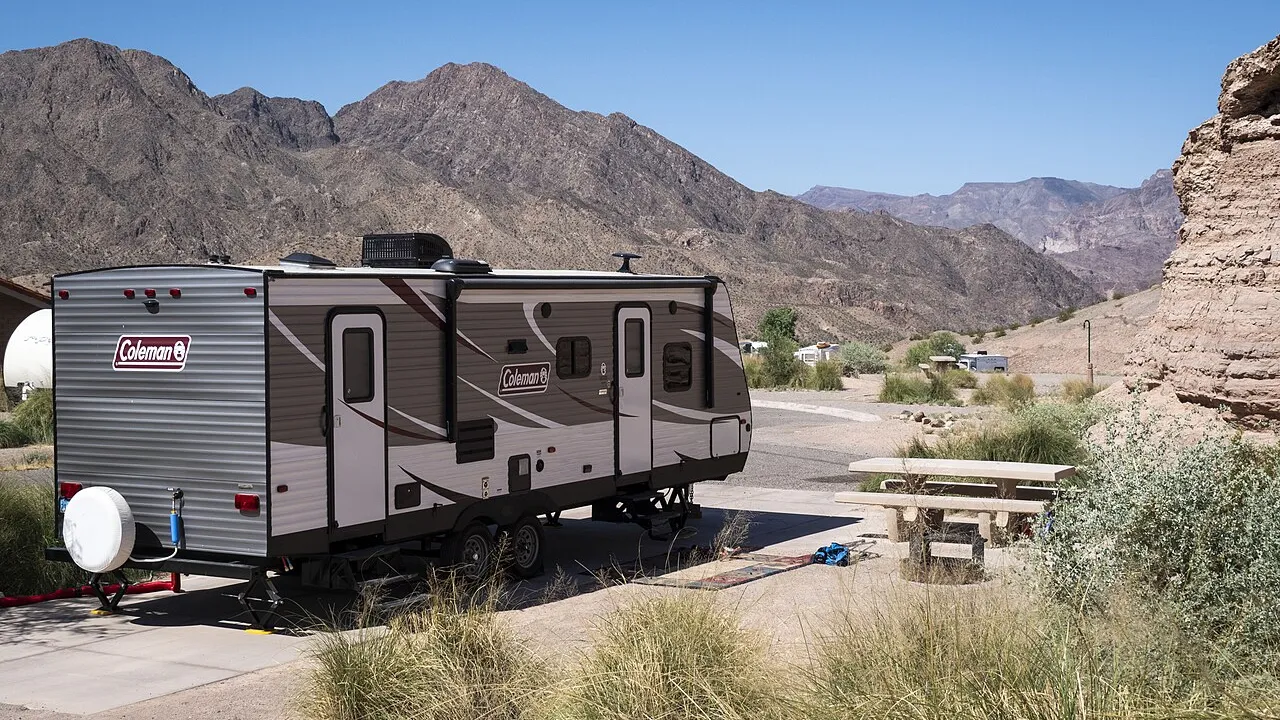
How do lenders see an RV park?
An RV park sits between two property types. A park full of long-term residents who pay monthly looks like a mobile home park: steady rent and low turnover. A park full of overnight and weekend guests looks like a hotel: income changes daily, depends on marketing and weather, and needs active management. Most parks are a mix, and the mix decides which lenders are interested.
Lenders sort the income into three groups:
- Transient sites. Nightly and weekly guests. Highest rate per night, least predictable.
- Seasonal sites. Guests who pay for a whole season, common in northern and resort markets.
- Long-term or monthly sites. Residents who stay for months or years. Lowest rate, most stable.
A park with mostly long-term income and public utilities can attract the same lenders that finance manufactured housing, as covered in mobile home park financing. A destination campground with cabins, a store and a pool is underwritten more like the properties in hotel financing. Knowing where your park falls saves weeks of calls to the wrong lenders.
Which lenders and loan programs finance RV parks?
| Loan source | Best for | Typical down payment | Things to know |
|---|---|---|---|
| Local bank or credit union | Established parks in the lender's home market | Commonly 25% to 30% | Often 5 to 10 year terms with 20 to 25 year amortization, personal guaranty expected |
| SBA 7(a) | Buyers who will run the park, including first-time owners | Commonly 10% to 20% | Loan maximum of $5 million, can include equipment, working capital and goodwill |
| SBA 504 | Purchases and expansions heavy in real estate and site improvements | Commonly 15% to 20% | Bank first loan plus a fixed-rate second loan from a certified development company |
| USDA Business and Industry guaranty | Parks in rural areas | Commonly 20% to 25% | A federal guaranty on a bank loan for rural businesses, can exceed SBA loan sizes |
| Seller financing | Parks with weak records or buyers short on cash | Negotiated | The seller carries a note, sometimes behind a bank loan if the bank allows it |
| Private or bridge lender | Turnarounds, expansions, fast closings | Commonly 30% or more | Short term and higher cost, needs a refinance plan |
The SBA programs require an active business, not a passive rental. A park run with daily operations, reservations and guest services normally fits. If nearly all of the income comes from long-term site rent, ask the lender early whether the park still qualifies. The two programs are compared in SBA 504 vs 7(a) for commercial real estate.
Large, stabilized parks in strong markets can sometimes reach national lenders. Agency manufactured housing programs are built for mobile home communities and typically allow only a limited share of RV sites, so they fit few true RV parks. For most buyers, the practical search starts with banks and credit unions near the property, a point developed in local bank vs national lender.
What do lenders check when they underwrite a park?
Underwriting starts with the seller's records and ends with the lender's own, more cautious version of the income. Expect questions on each of these:
- Financial records. Two to three years of tax returns and profit and loss statements, plus reservation system reports that tie to bank deposits. Unrecorded cash income does not count.
- Occupancy by season. Site nights sold per month, so the lender can see the off-season.
- Income mix. The share from transient, seasonal and long-term sites, and from extras such as a store, propane, laundry and cabin rentals.
- Utilities. Public water and sewer are preferred. Private wells, septic systems and treatment plants need inspection reports and capacity records.
- Electrical service. Whether pedestals supply the 50-amp service that larger RVs need.
- Flood zone. Many parks sit on rivers and lakes. Flood insurance cost and site elevation affect value.
- Park-owned units. Cabins and park model units earn well but are often treated as personal property, which lenders may value at little or nothing.
- Management. Who runs daily operations, and whether you have hospitality or park experience.
The lender then calculates net operating income (NOI), which is income minus operating expenses before loan payments. It will add costs the seller may not show, such as a management fee, on-site payroll at market wages and a yearly reserve for roads, utilities and pedestals. The method is laid out in how lenders calculate NOI.
A worked example: sizing a loan on a 100-site park
Say a park has 100 sites: 40 rented monthly and 60 rented by the night. The numbers below are hypothetical and round.
- Monthly sites. 40 sites at $550 a month for 12 months is $264,000.
- Nightly sites. 60 sites open 200 nights a year is 12,000 available site nights. At 50% occupancy, 6,000 nights are sold. At $50 a night, that is $300,000.
- Other income. Store, laundry and propane bring in $36,000.
- Total income. $264,000 plus $300,000 plus $36,000 is $600,000.
- Expenses. Operating costs run 50% of income, or $300,000.
- NOI. $600,000 minus $300,000 is $300,000.
You agree to pay $3,200,000. A bank offers 70% of the price, a loan of $2,240,000, so you need $960,000 down plus closing costs. At a hypothetical 7.5% rate over 25 years, the payment is about $16,550 a month, or about $199,000 a year. The debt service coverage ratio (DSCR), which is NOI divided by yearly loan payments, is $300,000 divided by $199,000, or about 1.51x.
Now the lender's version. The underwriter sees that nightly income averaged $250,000 over three years, not $300,000, and uses the average. Total income becomes $550,000. Holding expenses at $300,000, NOI drops to $250,000 and DSCR to $250,000 divided by $199,000, or about 1.26x. Lenders commonly want 1.25x to 1.40x or more on this property type, so the deal passes with almost no cushion. A lender that wants 1.35x would cut the loan: $250,000 divided by 1.35 supports about $185,000 of yearly payments, which is roughly a $2,090,000 loan at the same rate and amortization. You would need about $150,000 more cash.
The lesson: size your offer on average income and the lender's expenses, not the seller's best year. The steps are in how to size a commercial loan.
How does seasonality affect the loan?
A park that earns most of its income in five months still owes a loan payment in all twelve. Lenders know this and look for proof that you can carry the off-season.
- Cash reserves. Lenders commonly want to see several months of loan payments in the bank after closing.
- Payment structure. Some banks will set seasonal payments, with larger payments in peak months and interest-only payments in the off-season. Ask, because it is rarely offered unprompted.
- A working capital line. A small line of credit can cover spring opening costs before revenue arrives.
- Timing of the purchase. Buying just before the season gives you income right away. Buying at the end of the season means months of payments from reserves.
- Annual, not monthly, coverage tests. Make sure any loan covenant is measured on a full year of results.
Year-round parks in warm markets and parks with a base of monthly residents have an easier time here. Lenders give more credit to income that repeats, such as seasonal contracts that renew every year.
Buying, expanding or building: how the financing differs
Buying an existing park is the simplest case because there are records to underwrite. The appraisal relies on the income, and the quality of the books decides the loan amount.
Expanding a park by adding sites, cabins or amenities is usually financed by the bank that holds the first loan, or with an SBA loan. The lender will want permits in hand, utility capacity confirmed, contractor bids and a projection of what the new sites will earn. Expect it to count only part of the projected income until the sites are open.
Building a new park is the hardest. There is no income history, development takes time and absorption is uncertain. Lenders commonly ask for a feasibility study, 25% to 35% or more in cash or land equity, a personal guaranty and proven experience. The mechanics are in commercial construction loans explained.
What to prepare before you contact lenders
- Three years of the park's tax returns and profit and loss statements, plus the current year to date.
- Monthly occupancy and revenue reports from the reservation system.
- A site map showing the number and type of sites, hookups and amenities.
- Utility information: water and sewer source, septic or treatment permits, recent inspections.
- A list of park-owned units and equipment included in the sale.
- Your personal financial statement, tax returns and a short resume.
- A one-page summary of the deal: price, loan requested, down payment source and your plan for the park.
Send that package to a short list of lenders that already hold loans on parks or similar hospitality properties in the region. Terms vary widely between lenders, so confirm them with the lender and your own attorney and accountant before you sign anything.
Where CREaiD helps
CREaiD's lender search is built on public loan records from banks, credit unions, SBA lenders and other lenders. Pick the state, the kind of loan and the loan amount to see which lenders made that kind of loan there. The deal check takes your value, loan, income and rate and shows loan-to-value, debt coverage and debt yield, so you can find a weak spot before a lender does.

Brian Gramlich is the CEO and founder of Terrydale Capital, a commercial real estate finance firm based in Dallas, Texas, and the founder of CREaiD.
Key takeaways
- Lenders treat an RV park as part real estate and part hospitality business, and the mix of nightly and long-term income decides who will lend.
- Local banks and credit unions make most park loans, often with an SBA or USDA guaranty.
- Underwriters use average income over several years and add management, payroll and reserve costs the seller may not show.
- Seasonal parks need cash reserves or a seasonal payment structure to carry the off-season.
- Clean records that tie to bank deposits are the single biggest factor in the loan amount.
Questions people ask
How much down payment do I need to buy an RV park?
Commonly 25% to 30% with a conventional bank loan and 10% to 20% with an SBA loan. Lenders also want cash left over after closing to cover off-season payments and repairs. A new development usually needs more.
Can I get an SBA loan for a campground?
Yes, when you will actively operate it as a business. SBA 7(a) loans can cover the land, improvements, equipment and working capital, and SBA 504 loans fit purchases and expansions heavy in real estate. Ask the lender early if most of the income comes from long-term site rent.
Do lenders count cabin and store income?
They count it when it is documented, but often value it more cautiously than site rent. Cabins and park model units are frequently treated as personal property in the appraisal. Store and activity income depends on management, so some lenders discount it.
What DSCR do lenders want on an RV park?
Commonly 1.25x to 1.40x or higher, which is more than they ask on apartments because the income is less predictable. Parks with mostly long-term residents may qualify at the lower end. The lender applies the ratio to its own NOI figure, not the seller's.
Is it harder to finance an RV park than a mobile home park?
Usually, yes. Mobile home parks have long-term residents and steady rent, so more lenders and programs are available. RV parks with heavy nightly income are treated as hospitality businesses, which narrows the field mostly to banks, credit unions and SBA or USDA lenders.
Can I finance an RV park with seller financing?
Often, yes. Many park sellers will carry part of the price, especially when the records are thin or the park needs work. If a bank is also lending, it must approve the seller note and may require it to be subordinate, with limits on payments.
CREaiD shows the lenders that really made your kind of loan in your state, from public loan records.