
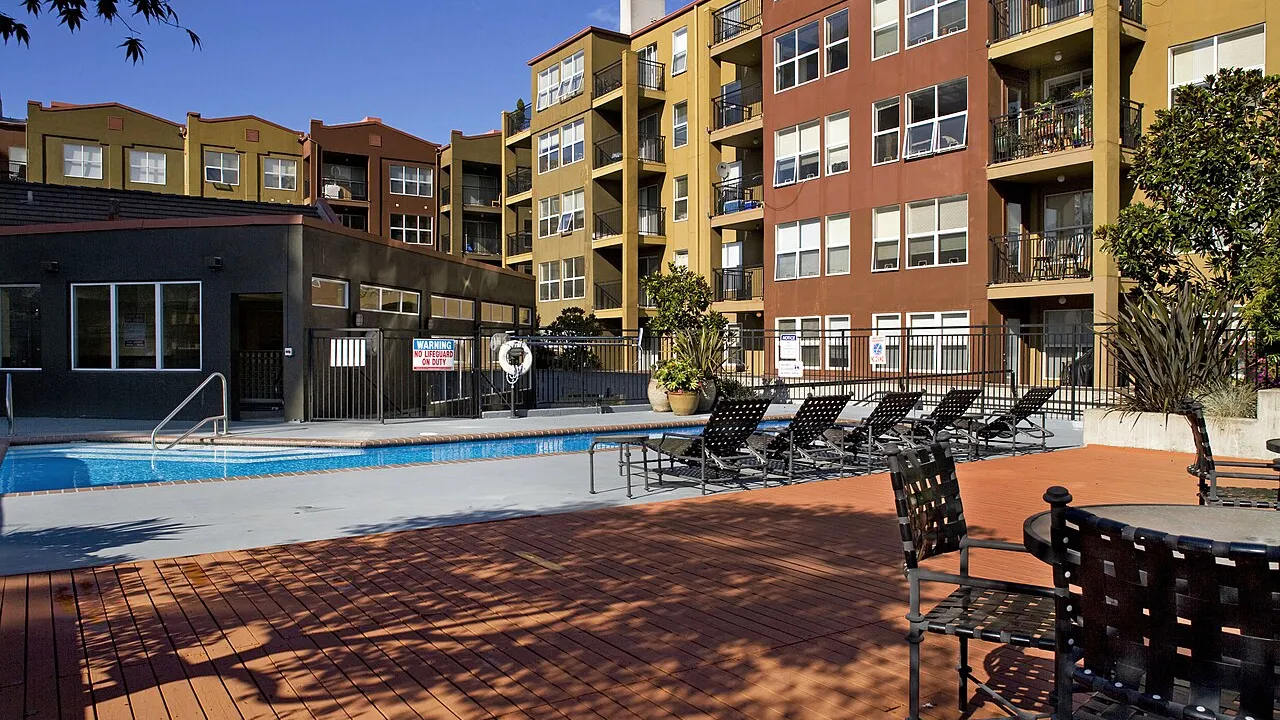
What do Ohio apartment loans look like?
Federal mortgage data for loans closed in 2025 shows 190 lenders made at least one loan on an Ohio apartment building (five or more units): 95 banks, 84 mortgage lenders and 11 credit unions. The numbers below use middle for the median, the point where half of the loans are above and half are below.
- Loans closed: 1,361, for about $7.13 billion.
- Middle loan: $965,000. A quarter of loans were under $435,000 and a quarter were over about $3.4 million.
- Middle rate: 6.81%, among the 1,067 loans that reported a rate.
- Middle loan-to-value: 70%. Loan-to-value (LTV) is the loan divided by the property's value.
- Middle term: 120 months, or ten years.
- Purpose: 664 refinances and 615 purchases.
- Building size: 816 loans on 5 to 24 units, 310 on 25 to 99 units and 235 on 100 units or more.
Three things stand out against Texas, California, Florida, New York, Illinois, Georgia and North Carolina. Ohio's middle rate of 6.81% was the highest of the group. Its middle LTV of 70% was also the highest. And its middle loan, under $1 million, was one of the smallest. Six of every ten loans were on buildings with 5 to 24 units.
For a buyer, 70% is good news: the middle Ohio borrower put in about 30% of the value as equity, less than in most other large states. The price of that is the rate. More debt against the same building is more risk for the lender, and the loan costs more.
Source: CREaiD analysis of public loan records.
What rate did Ohio apartment loans close at in 2025?
The middle rate was 6.81%. A quarter of loans were at 6.35% or lower and a quarter at 7.35% or higher, a spread of exactly one percentage point. On the middle loan of $965,000, one year of interest at 6.81% is about $65,700, and one point of rate is worth $9,650 a year.
Look at the lower-quarter figure. In several other states a quarter of loans closed below about 5.6% to 5.9%. In Ohio the cheapest quarter started at 6.35%. The low-rate lenders exist here, but they made a smaller share of the loans, because the typical Ohio loan is too small for them.
Rates are set from a market index plus the lender's margin for risk, and loan size, debt level and property quality all move that margin. The full explanation is in what interest rate apartment building loans have and how commercial loan interest rates are set.
The 10 largest apartment lenders in Ohio
| Lender | Loans | Total amount | Loan sizes closed |
|---|---|---|---|
| Bellwether Enterprise Real Estate Capital | 49 | $924 million | $2.4 million to $90.4 million |
| Lument Real Estate Capital | 29 | $498 million | $1.2 million to $70.0 million |
| Walker & Dunlop | 22 | $376 million | $1.2 million to $107.5 million |
| JPMorgan Chase Bank | 4 | $254 million | $8.5 million to $127.0 million |
| PNC Bank | 10 | $254 million | $2.2 million to $36.2 million |
| The Huntington National Bank | 11 | $242 million | $385,000 to $60.2 million |
| Berkadia Commercial Mortgage | 20 | $211 million | $1.0 million to $49.2 million |
| Arbor Realty Trust | 16 | $190 million | $765,000 to $29.6 million |
| Barings Multifamily Capital | 17 | $187 million | $2.4 million to $29.6 million |
| S&T Bank | 21 | $162 million | $375,000 to $25.8 million |
The ranking is by dollars closed in 2025. Bellwether Enterprise leads clearly, with 49 loans for about $924 million and a typical LTV of 70%. None of its Ohio loans were sold to Fannie Mae or Freddie Mac.
These ten lenders closed 199 loans, about 15% of Ohio's count, and about $3.30 billion, about 46% of the dollars. The other 85% of loans, 1,162 of them, came from the remaining 180 lenders. The middle Ohio loan of $965,000 is below the smallest loan of seven of these ten. Only Huntington, S&T Bank and Arbor Realty Trust closed Ohio apartment loans under $1 million. The rest of the names are on the Ohio apartment lenders page.
Regional banks or agency lenders: which side are you on?
The top ten contains two groups with very different 2025 records. One group sells most of its loans to Fannie Mae or Freddie Mac, the two government-sponsored companies that buy apartment loans from approved lenders. The other is regional banks whose loans were not sold to either.
| Lender | Typical rate | Typical LTV | Sold to the agencies |
|---|---|---|---|
| Barings Multifamily Capital | 5.02% | 73% | 15 of 17 |
| PNC Bank | 5.68% | 75.4% | 8 of 10 |
| Berkadia | 5.71% | 70% | 19 of 20 |
| Walker & Dunlop | 5.81% | 71% | 19 of 22 |
| Lument | 5.87% | 68.6% | 29 of 29 |
| Arbor Realty Trust | 5.88% | 69% | 14 of 16 |
| S&T Bank | 6.60% | 71.7% | 0 of 21 |
| Huntington | 6.85% | 67.9% | 0 of 11 |
A typical rate is the middle rate on the Ohio apartment loans that lender closed in 2025. It is a record, not a quote. The pattern is plain all the same: the agency sellers were between 5.02% and 5.88%, and the two regional banks were at 6.60% and 6.85%, close to the statewide middle. The LTVs are about the same in both groups, near 70%.
So the question is whether your deal can go the agency route. That takes a stabilized building and, on this evidence, a loan of roughly $1 million or more: the smallest Ohio loans in the agency group ranged from $765,000 at Arbor Realty Trust to about $2.4 million at Barings. Below that, or for a building that is still being fixed up, a bank is the realistic lender. Banks also tend to be more flexible on property condition and structure. See agency loan vs. bank loan for an apartment building.
Columbus, Cleveland and Cincinnati share the market
| County | Loans in 2025 | Share of state |
|---|---|---|
| Franklin County (Columbus) | 212 | 15.6% |
| Cuyahoga County (Cleveland) | 170 | 12.5% |
| Hamilton County (Cincinnati) | 166 | 12.2% |
| Montgomery County (Dayton) | 102 | 7.5% |
| Lucas County (Toledo) | 52 | 3.8% |
| Summit County (Akron) | 51 | 3.7% |
| Stark County (Canton) | 43 | 3.2% |
| Butler County | 32 | 2.4% |
Ohio has no single dominant county. Franklin County leads with 212 loans, but Cuyahoga County (170) and Hamilton County (166) are close behind, and Montgomery County had 102. The three largest together hold 548 loans, about 40% of the state.
That balance shapes how you search. Each of the big three has its own set of local banks, and a bank that is busy in Cincinnati may not lend in Cleveland. Mid-size counties such as Lucas, Summit and Stark each had 43 to 52 loans, enough to show which lenders are active there. Build the list from the county page for your property, starting at the Ohio lender hub. The trade-offs are in local bank vs. national lender.
Worked example: a 70% loan on a 16-unit building
Say you are buying a 16-unit building in Ohio for $1,400,000. The figures are hypothetical and round. The ratios are the 2025 statewide middles.
- Loan at 70% LTV: $1,400,000 x 0.70 = $980,000.
- Down payment: $1,400,000 minus $980,000 = $420,000, before closing costs and reserves.
- One year of interest at 6.81%: $980,000 x 0.0681 = about $66,700.
- If you chose 60% instead, the loan would be $840,000 and the down payment $560,000. You would put in $140,000 more and owe about $9,500 less interest each year at the same rate.
- Either way, the lender tests the building's net operating income against the full yearly payment, interest plus principal. Lenders commonly want income of about 1.20 to 1.25 times that payment.
At 70% the income test is usually the tight spot. A building can appraise well and still not carry the payment at a rate near 7%. Check it before you make an offer, using DSCR explained and how to size a commercial loan. The steps for a first purchase are in how to get a loan for an apartment building, step by step.
Ohio SBA lenders for a building your business will use
SBA loans are for owner-occupied business property, not for rental apartment buildings. For that kind of purchase, SBA loan records for fiscal years 2024 to 2026 show 692 SBA 504 loans in Ohio from 133 lenders and partners. The most active were Alloy Development Co. with 90 loans (about $132 million), Community Capital Development Corporation with 64 and Growth Capital Corp. with 52.
SBA 7(a) real estate lending was about the same size, 702 loans from 106 lenders, and one name stands out. The Huntington National Bank (see its SBA lending record) closed 173 of them, about a quarter of the state, for about $187 million, with a typical starting rate of 8.75%. GBank closed 34 and Live Oak Banking Company closed 36, both with a typical starting rate of 8.50%. See the Ohio SBA 504 lenders page. For other property types, the Ohio commercial property lenders page covers 275 banks with Ohio offices that hold commercial property loans. These are records of closed loans, so confirm current terms with the lender and your own counsel.
Match your Ohio deal to lenders with CREaiD
CREaiD is a lender search built on these public loan records. In the Ohio multifamily search you enter your loan amount and narrow to your county, to purchase or refinance, and to your building size. You see the lenders that closed that kind of loan there, which in a three-city state is a different list for each city.
The deal check covers the income test from the example above: enter the value, the loan, the income and the rate and it shows loan-to-value, debt coverage and debt yield, and marks what is weak.

Brian Gramlich is the CEO and founder of Terrydale Capital, a commercial real estate finance firm based in Dallas, Texas, and the founder of CREaiD.
Key takeaways
- Ohio lenders closed 1,361 apartment building loans in 2025 for about $7.13 billion, with a middle loan of $965,000.
- The middle rate was 6.81% and the middle loan-to-value was 70%, both the highest among the eight large states compared here.
- Agency sellers in the top ten had typical rates of 5.02% to 5.88%, while two regional banks were at 6.60% and 6.85%.
- The ten largest lenders closed only about 15% of Ohio's loans, so most borrowers will use a lender outside the top ten.
- Franklin, Cuyahoga and Hamilton counties together had 548 loans, about 40% of the state.
Questions people ask
Who is the largest apartment lender in Ohio?
By dollars closed in 2025, Bellwether Enterprise Real Estate Capital was first with 49 loans for about $924 million. Lument Real Estate Capital was second with 29 loans for about $498 million, and Walker & Dunlop was third with 22 loans for about $376 million. Most Ohio loans, about 85%, came from lenders outside the top ten.
What is the interest rate on an apartment building loan in Ohio?
For loans closed in 2025, the middle rate was 6.81%. A quarter of loans were at 6.35% or lower and a quarter at 7.35% or higher. Agency lenders on larger loans had typical rates between 5.02% and 5.88%. Rates change, so read these as a record of that year.
How much down payment do I need for an apartment building in Ohio?
The middle loan-to-value in 2025 was 70%, so the middle borrower put down about 30% of the value. On a $1,400,000 building that is a $980,000 loan and $420,000 of equity. The building's income has to support the payment, and that can lower the loan.
Can I get an apartment loan under $1 million in Ohio?
Yes, and it is the most common size. Half of Ohio's 2025 apartment loans were under $965,000 and a quarter were under $435,000. Among the ten largest lenders, Huntington closed loans from $385,000, S&T Bank from $375,000 and Arbor Realty Trust from $765,000. Local banks and credit unions make most loans of this size.
Which Ohio cities have the most apartment lending?
Franklin County (Columbus) had 212 loans in 2025, Cuyahoga County (Cleveland) 170 and Hamilton County (Cincinnati) 166. Montgomery County (Dayton) had 102, and Lucas, Summit and Stark counties had between 43 and 52 each.
How long is the term on an Ohio apartment loan?
The middle term on loans closed in 2025 was 120 months, which is ten years. The term is when the balance comes due, and it can be shorter than the schedule used to calculate the payment. Ask each lender how long the rate is fixed and what it costs to pay off early.
CREaiD shows the lenders that really made your kind of loan in your state, from public loan records.