
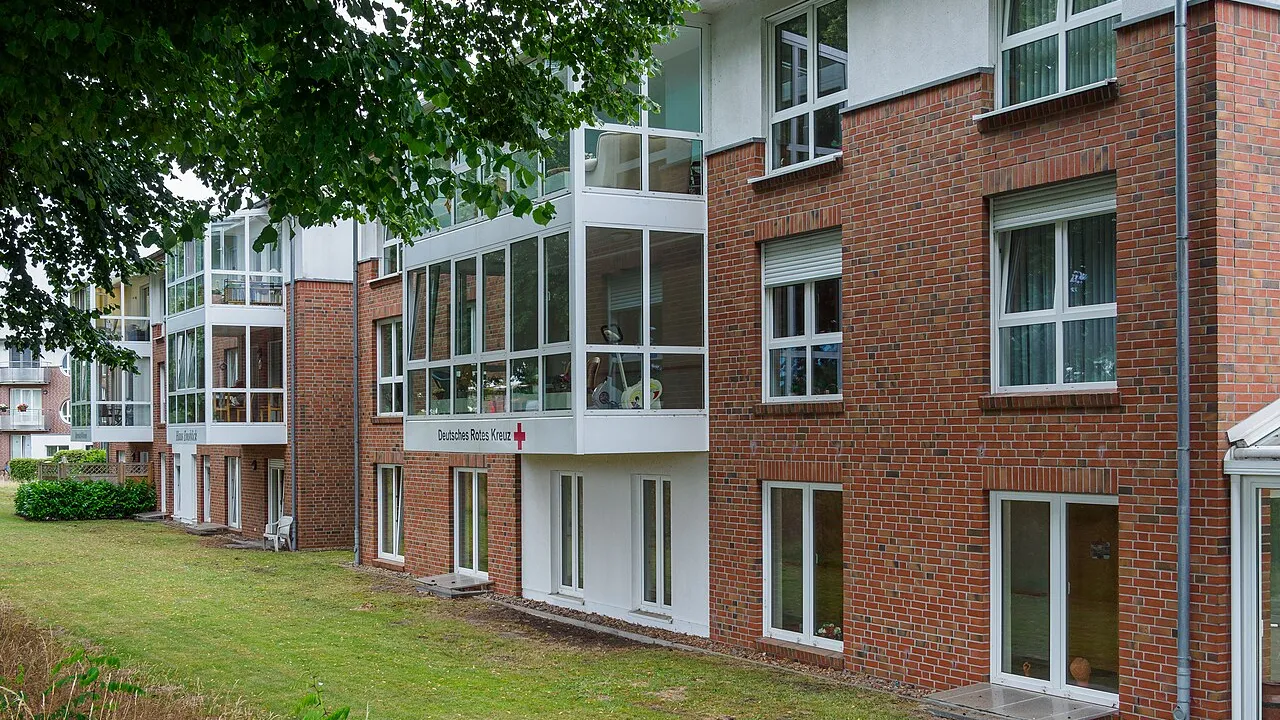
What counts as senior housing, and why does the type matter?
Senior housing is a range of properties, from apartments with a few services to licensed medical facilities. The more care a property provides, the more it behaves like an operating business, and the more cautious lenders become.
| Type | What it provides | How lenders see it |
|---|---|---|
| Active adult (age-restricted) | Apartments with no meals or care | Close to ordinary apartments |
| Independent living | Apartments with meals, housekeeping and activities | Housing with a service business attached |
| Assisted living | Help with daily activities such as bathing and medication, state licensed | A care business in a special-purpose building |
| Memory care | Secured care for residents with dementia, higher staffing | Higher revenue per resident, higher operating risk |
| Skilled nursing | Medical care around the clock, heavy government reimbursement | A health care business, a specialist lender market |
Many communities combine two or three of these under one roof. Tell lenders the unit count by care level in the first conversation, because some lenders finance independent and assisted living but not skilled nursing, and some will not lend on memory care alone.
Which lenders finance assisted living and senior housing?
| Lender type | Best for | Typical terms | Trade-off |
|---|---|---|---|
| Banks and credit unions | Purchases, construction, smaller communities, local operators | Commonly 3 to 10 year terms, 65% to 75% of value, with recourse | Balloon maturity and a personal guaranty |
| HUD-insured loans (Section 232) | Stabilized assisted living, memory care and skilled nursing | Fixed rate, non-recourse, fully amortizing over as long as 35 years on existing properties | Slow process and heavy paperwork |
| Fannie Mae and Freddie Mac seniors housing | Stabilized independent living, assisted living and memory care with experienced operators | Fixed or floating, commonly 5 to 10 year terms or longer, non-recourse | Operator experience and property quality standards |
| SBA 7(a) and 504 | Small owner-operated assisted living and residential care homes | Up to 25 years, lower down payments | Loan size limits and owner-operator requirement |
| Bridge lenders | Lease-up, turnarounds, repositioning | Commonly 2 to 3 years, floating rate, interest-only | Higher cost and a required exit plan |
A common path for a growing operator is a bank or bridge loan to buy or build, then a refinance into HUD or agency debt once the community is full and stable. HUD loans are explained in HUD multifamily loans explained (the health care program is separate from the apartment programs but works on similar principles), and the agency side in Fannie Mae and Freddie Mac multifamily loans.
For a small home, such as a converted house licensed for a handful of residents, SBA lenders and local banks are the realistic choices. See SBA 504 vs 7(a) for commercial real estate.
What do lenders underwrite in a senior housing deal?
An apartment lender studies rents and expenses. A senior housing lender studies those and the business inside the building. Expect a close look at:
- Operator experience. How many communities you or your management company run, for how long, and with what results. This is often the first screen.
- Occupancy. Current occupancy by care level and the trend over two to three years. Lenders want to see a property hold stable occupancy before permanent financing.
- Payer mix. The share of revenue from private pay, long-term care insurance, Medicaid and Medicare. Heavy reliance on government programs brings reimbursement risk.
- Rates and care fees. Base monthly rent plus care charges, how often they rise and how they compare with competitors.
- Staffing and labor cost. Payroll is the largest expense. Lenders look at wage trends, turnover and use of agency staff.
- Licensing and survey history. State inspection results, citations and any admission holds.
- Management fee. Lenders underwrite a management fee, commonly around 5% of revenue, even if you self-manage and pay yourself nothing.
- Competition. New communities opening nearby and how quickly the market absorbs new units.
The lender then tests the debt service coverage ratio (DSCR), which is net operating income (NOI) divided by yearly loan payments. Senior housing commonly needs more coverage than apartments: often around 1.30x and up for assisted living, with more for memory care and skilled nursing. See DSCR explained.
A worked example: how occupancy moves coverage
Say an assisted living community has 80 units. The numbers are hypothetical and round.
- Revenue. 70 units are occupied (87.5%) at an average of $5,000 a month. That is $350,000 a month, or $4,200,000 a year.
- Expenses. Operating costs, including a 5% management fee, are 70% of revenue, or $2,940,000.
- NOI. $4,200,000 minus $2,940,000 is $1,260,000.
- Loan. A $10,000,000 loan at a hypothetical 6.5% rate over 30 years has a payment of about $63,200 a month, or about $758,500 a year.
- Coverage. $1,260,000 divided by $758,500 is about 1.66x.
That looks comfortable. Now lose seven residents, taking occupancy to 63 units. Revenue falls by 7 times $5,000 times 12, or $420,000. Costs do not fall nearly as much, because the building still needs a cook, a nurse, night staff and a full maintenance budget. Suppose expenses drop by only $120,000. NOI falls by $300,000 to $960,000, and coverage becomes $960,000 divided by $758,500, or about 1.27x.
A drop of about nine points of occupancy erased almost a quarter of the income. That is the reason lenders ask for higher coverage on senior housing, hold reserves and want an operator who has managed through a soft period. It is also why the same building can support a very different loan depending on whose numbers are used.
How do you finance a new or half-full community?
Permanent lenders want stable occupancy. A new building, a community that lost residents or one changing operators does not have it yet, so the financing comes in two steps.
- Construction. Banks make most senior housing construction loans, commonly at 60% to 70% of cost, with recourse and a completion guaranty. Lenders expect a market study and an experienced operator. HUD also insures construction loans, on a much longer timeline.
- Lease-up. New communities can take two years or more to fill. The loan needs an interest reserve and an operating deficit reserve, which are funds set aside to cover payments and losses until income catches up.
- Bridge financing. A short-term, floating-rate loan covers a purchase, a turnaround or the months between construction and stabilization. See commercial bridge loans explained.
- The takeout. Once occupancy holds steady, commonly for several months to a year depending on the program, the property refinances into HUD, agency or bank permanent debt.
Plan the exit before you close the first loan. Ask the permanent lender what occupancy, coverage and seasoning it needs, then check that your bridge term and extensions give you enough time. The process is covered in how to exit a bridge loan.
Ownership structure: operator, landlord or both
Lenders need to know who holds the license and who owns the real estate, because the two are often different companies.
- Owner-operator. One group owns the building and runs the care business. Simplest for banks and required for SBA loans.
- Owner with a third-party manager. You own the property and the license, and hire a management company. The lender underwrites the manager's record and will want the right to replace it.
- Landlord and tenant. A property company leases the building to an operating company that holds the license. The lender reviews the lease, the rent coverage and both companies, and commonly takes security in both.
Expect guaranties as well. Bank and construction loans normally carry personal or corporate recourse. HUD and agency loans are generally non-recourse with standard carve-outs for acts such as fraud. The difference is explained in recourse vs non-recourse loans.
What to prepare, and mistakes to avoid
- Three years of operating statements and the trailing 12 months, by month.
- Monthly census reports showing occupancy by care level and payer type.
- A current rent roll with base rent and care charges for each resident.
- The license, the latest state survey and any plan of correction.
- Operator and management company resumes with a list of communities run.
- Staffing schedules and payroll summaries.
- Your personal or corporate financial statements and a schedule of real estate owned.
Common mistakes: presenting NOI with no management fee, projecting full occupancy within a few months of opening, ignoring a competitor under construction nearby, approaching apartment lenders that do not finance care properties, and choosing a bridge loan too short for the lease-up. Program rules change and vary by lender, so confirm terms with the lender and your own counsel before you commit.
Where CREaiD helps
Run your numbers through the CREaiD deal check before you approach lenders: you enter the value, the loan, the income and the rate, and it shows loan-to-value, debt coverage and debt yield, flags what is weak and produces a one-page loan request. Then use the lender search, which is built on public loan records, to see lenders active in your state for the kind and size of loan you need.

Brian Gramlich is the CEO and founder of Terrydale Capital, a commercial real estate finance firm based in Dallas, Texas, and the founder of CREaiD.
Key takeaways
- Senior housing is a licensed operating business in a special-purpose building, so lenders underwrite the operator as closely as the property.
- Banks fund most purchases and construction, and HUD, Fannie Mae and Freddie Mac provide long-term loans once a community is stable.
- Lenders commonly ask for more debt coverage than on apartments because a small drop in occupancy removes a large share of income.
- Underwriters add a management fee of about 5% of revenue even when the owner self-manages.
- New or half-full communities need construction or bridge financing first, with the permanent takeout planned in advance.
Questions people ask
How much down payment do I need to buy an assisted living facility?
With a bank loan, commonly 25% to 35% of the price. SBA loans for small owner-operated homes can go as low as 10% to 20%. Lenders also expect working capital on top of the down payment, since care businesses carry heavy payroll.
Can I get an SBA loan for a residential assisted living home?
Yes, small owner-operated care homes are commonly financed with SBA 7(a) or SBA 504 loans. You must run the business, hold or obtain the state license, and show enough cash flow to cover the payments. Experience in care or health services helps a great deal.
What is a HUD 232 loan?
It is a mortgage insured by the Federal Housing Administration for assisted living, memory care, board and care and skilled nursing properties. It offers a long-term fixed rate, full amortization and non-recourse terms. The trade-off is a long, document-heavy approval process.
Will lenders finance a senior housing property with no operating experience?
Rarely on your own. Most lenders require an experienced operator, so first-time owners usually hire an established third-party management company or partner with one. The lender will underwrite that company's record.
Why do senior housing loans need a higher DSCR than apartment loans?
Because income is less stable and costs are mostly fixed. Residents move out more often, staffing must be kept up whatever the occupancy, and care is regulated by the state. Extra coverage gives the lender room for a soft period.
How long does it take to stabilize a new assisted living community?
It varies with the market and the size of the building, and two years or more is common. Lenders plan for this with interest and operating deficit reserves. Build your loan term and extensions around a slower lease-up than you hope for.
CREaiD shows the lenders that really made your kind of loan in your state, from public loan records.