
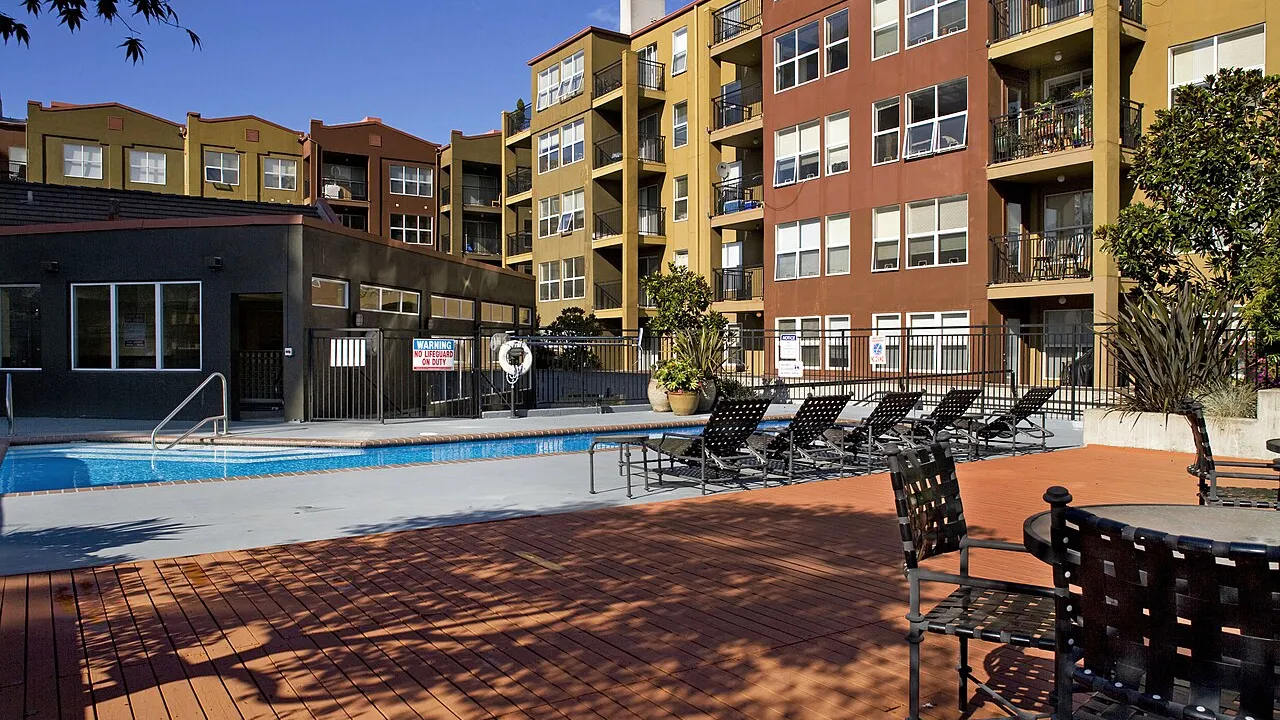
Who lends on apartment buildings
Lenders like apartments because people always need housing, leases reset every year and income is spread over many tenants. That is why a multifamily borrower can choose among loan sources that do not exist for retail or office. Each source fits a different deal.
| Lender type | Best fit | Typical features |
|---|---|---|
| Agency (Fannie Mae, Freddie Mac) | Stabilized properties, 5+ units | Long fixed terms, usually non-recourse, up to 30-year amortization |
| HUD/FHA | Stabilized or new construction, long holds | Very long fully amortizing terms, non-recourse, slow process |
| Banks and credit unions | Smaller or local deals, light renovation | Shorter terms, usually recourse, flexible structure |
| Life insurance companies | High-quality properties, lower loan amounts relative to value | Long fixed terms, conservative sizing |
| CMBS | Stabilized properties needing higher proceeds | Non-recourse, fixed rate, rigid servicing |
| Debt funds and private lenders | Renovation, lease-up, fast closings | Short floating-rate bridge loans |
For the wider picture across all property types, see types of commercial real estate lenders.
Match the lender to the stage of the property
The same 40-unit building can be an agency deal in one season and a bridge deal in another. What matters is occupancy, the condition of the units and whether current income supports the loan.
- Stabilized. Occupancy has been steady, commonly around 90% or higher for at least the last few months, and income covers the debt. Agency, bank, credit union, life company and HUD loans are all possible.
- Value-add. You plan to renovate units and raise rents. Current income may not support the loan you need. Start with bridge lenders and banks that fund renovation, then refinance into permanent debt once the work is done.
- Lease-up. The building is newly built, or was emptied for renovation, and is filling. Bridge lenders and some banks will lend against the projected income.
- Ground-up construction. Banks are the main source, with HUD 221(d)(4) as a slower option that combines construction and permanent financing. See how to find a construction lender.
A quick test: say the property has $400,000 of net operating income and the lender requires a 1.25x debt service coverage ratio. The most the property can pay in annual debt service is $320,000 ($400,000 divided by 1.25). If the loan you need costs more than that per year, the deal is not ready for permanent debt at that size, and a bridge loan or more equity is the realistic path.
How to reach agency and HUD lenders
You do not borrow from Fannie Mae, Freddie Mac or HUD directly. Each program works through a set of approved lenders that originate, underwrite and usually service the loans. Fannie Mae and Freddie Mac each license their own multifamily lenders, and HUD loans come through FHA-approved multifamily lenders. Some banks and mortgage companies that are not approved themselves act as correspondents and pass deals to one that is.
This matters for your search in three ways:
- Ask the loan officer plainly whether the firm is an approved lender for the program or a correspondent, and which programs it can deliver.
- Ask for both agency quotes if the lender offers both. The two programs price and size the same deal differently.
- Ask about the lender's small-balance program if your loan is under several million dollars. Both agencies run streamlined small-loan programs with lower costs.
Program details, including terms and typical requirements, are in Fannie Mae and Freddie Mac multifamily loans explained and HUD multifamily loans explained.
How size and unit count change the search
Commercial multifamily lending starts at five units. A building with one to four units is financed as residential property, through residential mortgage lenders, with different rules.
Above five units, loan size shapes the list. Small loans, commonly under about $1 million, are mostly bank and credit union business, because national programs have minimums and fixed costs that do not work on a small loan. From roughly $1 million up, agency small-balance programs come into play. Larger loans attract the full field, including life companies and CMBS lenders. For the low end of the range, see how to find a lender for a small-balance commercial loan.
Location matters too. Agency lenders price and size loans partly by market size, and some lenders avoid very small towns. A local bank or credit union is often the best first call for a building in a rural or small market. Whatever the size, ask each lender for its minimum and maximum loan amount at the start of the first conversation. It is the fastest way to find out whether you are talking to the right group, and it saves both sides from reviewing documents for a loan that was never possible.
What multifamily lenders ask for first
Have these ready before you make contact. A lender that receives all of them can usually give a preliminary quote within days.
- A current rent roll with unit type, tenant, rent, lease dates and any concessions.
- A trailing twelve months (T-12) of income and expenses, plus the prior one or two years if you have them.
- Unit mix, year built, a list of recent capital improvements and photos.
- For a purchase: the price and contract timeline. For a refinance: the current loan balance and when you bought.
- For value-add: the renovation budget, the rents you expect and the rent comparables that support them.
- A personal financial statement and a schedule of the real estate you own.
Lenders do not take your numbers as given. They adjust for vacancy, management fees and replacement reserves, and they compare your expenses with similar buildings. How lenders read a rent roll and a T-12 shows what they change and why, so your own estimate of the loan amount is close to theirs.
Where CREaiD fits in a multifamily search
CREaiD's Lender Matchmaker lets you describe a multifamily deal and get lenders that fit it from a database of 1,500+ commercial real estate lenders, including agency lenders, banks, credit unions and private lenders. Its Insights tool gives current debt financing market insights by location and asset type, which helps you set expectations before the first call. You can try it with a free version.
Program rules and lender requirements change, so confirm the terms of any quote with the lender and have your own counsel review the loan documents.

Brian Gramlich is the CEO and founder of Terrydale Capital, a commercial real estate finance firm based in Dallas, Texas, and the founder of CREaiD.
Key takeaways
- Multifamily borrowers can choose among agency, HUD, bank, credit union, life company, CMBS and bridge lenders.
- The stage of the property (stabilized, value-add, lease-up or construction) decides which lender group to call first.
- Fannie Mae, Freddie Mac and HUD loans are made through approved lenders, not by the agencies directly.
- Commercial multifamily lending starts at five units, and loan size narrows the list further.
- A clean rent roll and T-12 are the two documents every multifamily lender asks for first.
Questions people ask
What is the minimum number of units for a commercial multifamily loan?
Five. Properties with five or more residential units are financed as commercial real estate. Buildings with one to four units fall under residential mortgage rules, even when they are held as investments.
Are agency multifamily loans non-recourse?
Usually yes. Fannie Mae and Freddie Mac multifamily loans are typically non-recourse with standard carve-outs for acts such as fraud or misuse of funds. The guarantor still signs for those carve-outs, so read them with your attorney.
Can a first-time investor get an agency loan?
It is harder but possible. Agency lenders want to see multifamily ownership experience, net worth and liquidity that fit the loan size. A first-time buyer often needs an experienced partner or a professional management company, or starts with a bank or credit union loan instead.
What occupancy do lenders want on an apartment building?
For permanent financing, lenders commonly want occupancy around 90% or higher, held for at least the last few months. A property below that level is usually a bridge loan candidate until it stabilizes. Each lender and program sets its own test, so ask during screening.
How long does a multifamily loan take to close?
Bank and agency loans commonly close in about 45 to 90 days after application. HUD loans take considerably longer, often many months. Bridge and private lenders can close faster when the documents and third-party reports are ready.
CREaiD shows the lenders that really made your kind of loan in your state, from public loan records.